Why Dubai Property Is Still a Smart Investment in 2025
Despite headlines about rising prices, here's why Dubai real estate continues to outperform other global markets for international investors.
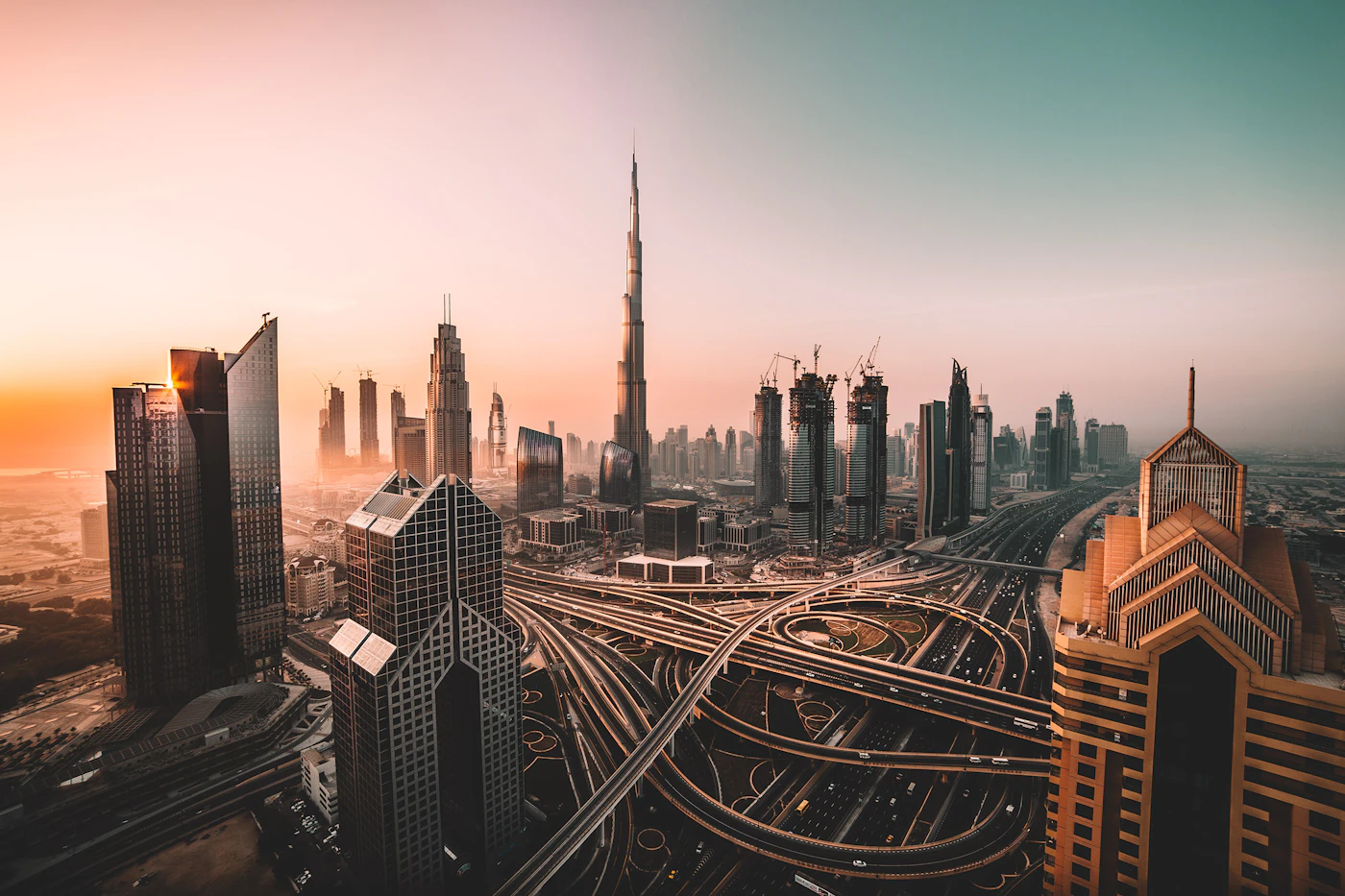
Every year someone says the Dubai market is going to crash. Every year it doesn’t.
That’s not complacency - it’s observation. Dubai’s fundamentals are genuinely different from the markets people are comparing it to. Here is why, in 2025, the investment case remains compelling.
Zero Tax on Investment Returns
Let’s start with the obvious one. In the UAE, there is:
- No capital gains tax on property sales
- No income tax on rental income
- No property tax (only annual service charges - maintenance fees, not government levies)
- No inheritance tax
Compare this to the UK, where capital gains tax on residential investment property sits at 18-24%, rental income is taxed as income, and stamp duty adds 3-5%+ on top of purchase price. Or the US, where federal capital gains plus state taxes can exceed 30% on property profits.
In Dubai, you keep what you make. That changes the return calculation dramatically.
Rental Yields That Actually Make Sense
Gross rental yields in Dubai range from 5-9% depending on the area and property type.
Jumeirah Village Circle: 7-9% gross. Business Bay: 6-8%. Dubai Marina: 6-8%.
Compare this to prime central London: 2-4%. Manhattan: 2-4%. Sydney: 3-4%.
After tax, transaction costs, and management fees, London and New York yields barely cover inflation. Dubai yields actually represent a real return. For an investor seeking income-generating assets, this matters enormously.
A Growing City, Not a Shrinking One
Dubai’s population has grown from approximately 3 million in 2020 to over 3.7 million today. The UAE government’s 2031 vision targets 5.8 million residents in Dubai alone.
This matters because housing demand is structurally driven by population. More people need more homes. Unlike many European cities where population is flat or declining, Dubai is a growth city - and its growth is backed by deliberate policy, visa reform, and global talent attraction.
The statistics bear it out: Dubai received over 17 million international visitors in 2023. The number of new UAE Golden Visa approvals runs into the tens of thousands annually. Each of these people potentially needs a place to live - or is evaluating permanent residence and property purchase.
Infrastructure That Keeps Expanding
Every time I think the city is done building, another announcement lands. In the past few years:
- Expo City Dubai (Expo 2020 legacy) - now a functioning residential and events community
- Metro expansion - Route 2020 opened, additional extensions planned
- New freehold zones - the government keeps designating new areas for foreign ownership
- Al Maktoum International Airport expansion - set to become the world’s largest airport when completed, driving enormous demand in Dubai South
Infrastructure investment signals long-term government commitment to growth. The UAE government has the fiscal capacity and the track record to follow through.
The Golden Visa Effect
Introduced in 2019 and expanded in 2022, the UAE Golden Visa has changed buyer psychology fundamentally. For AED 2 million in a ready property, a foreign investor gets 10-year renewable UAE residency, the right to sponsor family, and the ability to enter and exit without residency lapsing.
This has converted many “pure investors” into “investor-residents” - people who want a real foothold in the UAE, not just a line item on a spreadsheet. That’s a structurally different buyer: more motivated, longer-term horizon, less likely to sell at the first sign of a correction.
Off-Plan Pipeline: Price Appreciation Baked In
Major developers are selling projects 3-4 years before completion. In a growing market, that means buyers who purchased off-plan in 2022 are sitting on substantial paper gains as completion approaches in 2025-2026.
This is not a guarantee - it’s a function of demand matching supply. Dubai has managed this balance better than most global markets. The government’s Real Estate Regulatory Authority (RERA) monitors the pipeline and has mechanisms to slow releases when inventory builds up.
I Won’t Pretend There Are No Risks
I am honest about this with every client. Dubai property investment carries risks:
Off-plan delivery risk: Delays of 1-3 years are common with some developers. A handful have cancelled projects. You cannot rent out or occupy an off-plan property until handover.
Market correction risk: Dubai has had significant corrections - most notably in 2008-2009 and 2014-2016. Property values fell 40-50% during those periods. Recovery happened, but it took years. If you need liquidity within 2-3 years of purchase, you may not have it when you need it.
Currency risk: If you earn in currencies that depreciate against the AED (which is pegged to the USD), your returns in home-country currency terms are affected. The AED peg provides stability but means your risk tracks USD movements.
Oversupply risk: The Dubai market has historically had supply-side management challenges. Watch the pipeline.
The mitigants: buy quality developers, buy ready or near-completion, buy for genuine yield (not just capital appreciation hope), and hold for 5+ years.
The Bottom Line
Dubai is not risk-free. No market is. But the combination of zero tax, high yields, population growth, government infrastructure spending, and the Golden Visa residency incentive makes it one of the more attractive risk-return propositions for international capital right now.
The buyers who do well here are the ones who do their homework, buy quality, and think in 5-year horizons. The ones who struggle buy off-plan from inexperienced developers on leverage at the peak of a cycle.
If you’re thinking about it, the best time to ask questions is now - not after prices move again.